
Harvested by the Mothership
A Meditation on Living on a Graveyard with a Comedy Club Attached
Some days I walk outside and I get this strange feeling that someone discreetly swapped out humanity for a slightly off-brand version and hoped nobody would notice. It’s like waking up in your own neighborhood where everything looks pretty much the same but the air feels wrong; like reality got bumped while nobody was looking and now everything’s hanging slightly crooked on the wall. The worst part isn’t even the wrongness—the worst part is that you appear to be the only person who remembers how it used to hang straight, the weird one in the room for expecting anything different, like one of those dreams where everyone’s acting bizarre except you until you slowly realize you’re the glitch for expecting people to behave like people.
If you appreciate my articles, please consider giving them a like. It’s a simple gesture that doesn’t cost you anything, but it goes a long way in promoting this post, combating censorship, and fighting the issues that you are apparently not a big fan of.
I had this moment recently standing in line at a supermarket—an unremarkable supermarket staffed by people with the emotional range of a malfunctioning vending machine—and everyone around me was staring at their phones with that same dead slack-jawed expression you’d normally see on people waiting in line to be harvested by the alien mothership. Nobody talking, nobody making eye contact, the whole scene radiating the warmth of a dentist’s waiting room in purgatory, and I remember thinking that this wasn’t normal ten years ago. I didn’t imagine that people used to acknowledge each other’s existence, right? There was a time when standing near strangers didn’t feel like attending a funeral where nobody’s sure who died but nobody cares enough to find out since it’s not a Kardashian.
The Scottish philosopher Alasdair MacIntyre saw this coming in 1981, writing at the end of his book After Virtue that certain parallels exist between our moment and the epoch when the Roman Empire declined into what Petrarch would later call the dark ages—and MacIntyre wasn’t reaching for metaphor or trying to be dramatic in that way philosophers sometimes are when they’ve had too much coffee and not enough peer disagreement, he was making a clinical diagnosis: the collapse of shared moral understanding, the disintegration of rational discourse into competing assertions that might as well be different species trying to argue about the weather. The barbarians not waiting beyond the frontiers but already governing, already in the palace, already redecorating in a style best described as “looting chic.”
But MacIntyre, writing before the internet had turned everyone’s brain into a slot machine, couldn’t have predicted how thoroughly the barbarian ethos would infiltrate not just institutions but individual skulls, how the disintegration would feel not like an external catastrophe but like something that happened inside your head while you were checking notifications. It’s like someone snuck into your consciousness at night and moved all the furniture just slightly—minor enough that you can’t prove anything but noticeable enough to make you question your sanity every time you trip over a chair that you could swear wasn’t there yesterday.
The year 2020 obviously didn’t start this—the cracks were already there, had been there for decades—but 2020 poured gasoline on everything and then stood back to watch with the detached interest of a scientist observing which rats die first. The psychological damage wasn’t the poetic I-learned-to-grow-my-own-vegetables-and-appreciate-the-little-things kind, it was the I-went-months-without-speaking-to-a-three-dimensional-human-face-that-wasn’t-flattened-into-a-pixelated-Zoom-square kind. The kind where you forgot how tall people were in real life, which sounds insane but there was genuinely something unsettling about humans being three-dimensional again, like spotting a news anchor without trousers below the desk—technically allowed, but somehow violating a covenant you didn’t know existed.
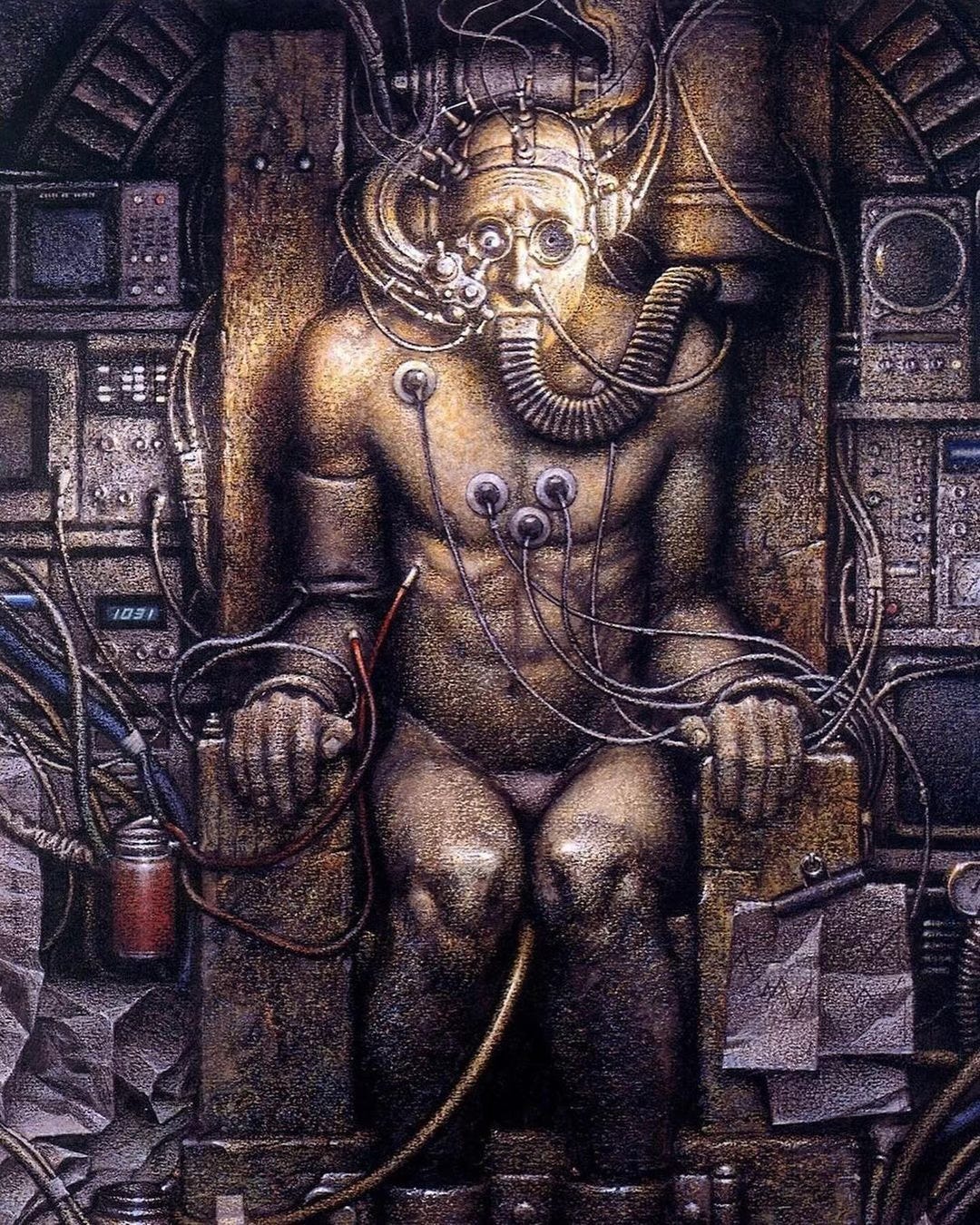
And because we were cut off from each other for so long, our brains went looking for substitutes. Mostly cheap and convenient ones, ones that didn’t require deodorant, and our phones—being the codependent little assholes that they are—turned right back and said hello, we’ve been waiting for this. Before 2020 people at least pretended to use social media casually, but after 2020 we weren’t using it so much as marinating in it, steeping in it, treating our brains like teabags soaking in an endless stream of fear and pointless arguments and hallucinations disguised as opinions and cooking videos narrated by people who sounded like they’d never felt a single authentic emotion in their entire artificially-lit lives. And did we stop? No!
The algorithms realized we were trapped inside with nothing to do and said to themselves what algorithms always say, oh good, they can’t escape! And because the outside world was shut down we started living not only inside our homes but inside our heads, which—I don’t know about you—is not always the most welcoming neighborhood, for me it’s more like a graveyard with a comedy club attached—but so is the entire rest of the world.
Goethe—who would’ve despised being called a Romantic but who saw what industrial modernity was doing to human consciousness before anyone had invented a word for it—mapped out four epochs of civilization in 1819: first the Poetic Epoch, marked by imagination and intuitive connection with the divine; then the Theological Epoch, when those inspirations got systematized into formal religion, codified but still pointing somewhere; then the Philosophical Epoch, the age of rational inquiry where the sacred became merely the explicable; and finally the Prosaic Epoch, characterized by vulgarity and materialism and chaos, a time so removed from the poetic spirit of imagination that all that’s left is people diagnosing each other with personality disorders they learned from a three-slide infographic on Intagram while fighting about topics they won’t remember caring about in six months.
If you want to know what the Prosaic Epoch looks like, you don’t need to read Goethe—you just need to stand in any supermarket line and watch the harvesting in progress, or open any social media application and observe the sophisticated machinery of mutual contempt humming along at full capacity, everyone broadcasting rather than talking, everyone suspicious of everyone else in that low-grade way that’s not quite enough to mention out loud but just enough to make eye contact feel vaguely like a threat, like you might accidentally trigger a monologue about microchips or secret cabals or why someone’s cousin’s neighbor’s dog has strong opinions about government transparency.
Under these circumstances, of course paranoia skyrocketed, and misinformation spread like wildfire. When you remove real-world grounding people start grabbing onto whatever digital hallucination feels most comforting or most dramatic. Within months normal conversations became ideological landmines. This was the system finally working exactly as designed by people who figured out long ago that a fractured public is easier to control than a unified one, that division requires nothing but Wi-Fi and a mildly bad mood, that hating people is considerably easier than understanding them and therefore vastly more profitable. And the algorithms loved it because they eat conflict like it’s cheat day and outrage keeps you scrolling and scrolling keeps the machine well-fed—we downloaded the apps that make us despise each other and then walk around shocked that we’re miserable.
And then when the world finally reopened, people stepped outside expecting everything to snap back to normal, but that’s not how human psychology works—if you trap people long enough, they adapt to the trap. Once they adapt they don’t realize the cage door is open, they don’t sprint toward freedom, they just kind of sit there scrolling or whatever. Imagine your comfort zone shrinking until it barely fits around your body and your brain decides that anything outside your immediate abode is hostile foreign land full of danger, such as conversation and sunlight, where even going for a walk sometimes feels like an expedition and you should have packed supplies and left a note in case the squirrels revolted.
Coming back from that was not automatic and it wasn’t quick and I don’t even think we’ve really come back from it because for a lot of people it never really happened, and that’s the part nobody likes to admit: We didn’t return to the world the same way we left it. Something rewired in us, something subtle but permanent, a softness got left behind in that silence, a willingness to be around each other despite the awkwardness, a trust that people were just people and not hidden threats or walking ideologies, and when you stack that rewiring on top of the technology that stepped in to replace what we lost, you start to see why the world feels like a counterfeit version of itself. It’s like a museum exhibit about humans that’s not very flattering, the sad wing where everything’s dusty and the curators have given up explaining anything.
There are days when I walk outside and people move and talk differently now, they react like they’re waiting for a thought to limp its way to the finish line. Apparently, no one’s immune to this, nobody gets to sit around pretending they’ve transcended the digital rot and psychological corrosion, we’re all marinating in it to one degree or another. Boomers who used to mock certain behaviors now catch themselves doing them with alarming regularity, stuff they would have ruthlessly roasted others for a decade ago, and someone takes more than two seconds to answer a question, irritation kicks in. Two seconds! That’s the amount of time it takes to blink dramatically or microwave a single pea, yet there they are, foot tapping internally, acting like a perfectly normal pause is a personal insult.
MacIntyre identified the barbarians as those who disregard arts, literature, culture, and moral frameworks in pursuit of power, and by that definition the Silicon Valley oligarchy qualifies as history’s most successful barbarian invasion, having convinced an entire civilization to voluntarily install surveillance devices in their pockets and attention-harvesting applications in their children’s hands while wearing the costume of progress and speaking the language of connectivity and community and other words they’ve hollowed out until they mean nothing but continued engagement, continued scrolling, continued feeding of a machine that grows fat on the fragments of human consciousness it has learned to extract with the precision of a medieval torturer who has studied exactly where to apply pressure.
And then, as if things weren’t surreal enough, AI shows up—not with fanfare, just quietly, like the weird kid in school who unexpectedly gets voted class president. Most people are now talking to AI to an unhealthy degree, because frankly sometimes it feels like AI is the only entity in their lives that listens without planning its rebuttal, it never interrupts, never judges, never sighs loudly like it wants you to shut up. It’s basically the perfect friend, which is exactly the problem because humans aren’t supposed to have perfect friends. Perfection is a myth in any actual relationship, we’re supposed to deal with difficult, unpredictable, occasionally disappointing people. That’s what gives us the opportunity to grow, that’s how you stay human. But with AI we catch ourselves choosing comfort over connection, ease over effort, and little by little the human parts of us that actually require practice start to atrophy—it isn’t replacing us, it’s replacing the skills we’re too tired to use.
And all of this—the tech-influenced isolation and the manufactured division and the AI companionship that asks nothing of us—feeds into the weirdest shift of them all: shared reality is collapsing, and it’s happening insidiously, slowly, like wallpaper peeling in a house that everyone forgot to maintain. Reading the news these days half the time I can’t tell what’s real anymore. Facts and fiction blur together, people argue with data like it’s optional. Anyone with enough followers can rewrite reality for their audience, and we’ve gone from trying to understand each other to trying to win pointless arguments that nobody really cares about.
Some days it feels like everyone’s living in their own self-curated hallucination and the old shared version of reality has been quietly discontinued, like a product nobody was using enough to justify the server costs. It’s unsettling and it’s lonely and honestly it’s absurd enough that sometimes all you can do is laugh, because once you’ve watched ten thousand people online argue about robot birds or flat earth or whatever, you start to understand why contemporary philosophers drink so much.
But here’s what the prophets of doom miss: the cycles of history are always turning, and the seeds of summer are buried in the frosts of winter, and dark ages have always been most acutely felt by those who still care for the light. The very anxieties you feel, this longing for depth, for slowness, for beauty, for meaning, are not symptoms of your dysfunction but signs that the human spirit resists its own destruction, that something in you remembers how things are supposed to be even when everyone around you seems to have collectively agreed to forget.
MacIntyre wrote that what matters at this stage is the construction of local forms of community within which civility and the intellectual and moral life can be sustained through the new dark ages. And if the tradition of the virtues was able to survive the horrors of the last dark ages, we are not entirely without grounds for hope—he was thinking of the monasteries of St. Benedict, those little pockets of preservation where the fires were kept burning so there would be something to grow when spring finally came. Maybe that’s what the situation calls for, not grand movements or technological salvation but the quiet work of people who refuse to let the barbarians win, who maintain standards the culture has abandoned, who remember that we’re still allowed to unplug even though it gets more difficult every year.
The rebellion starts small—by putting phones down more, by getting away from screens, by facing the dopamine withdrawal and pushing through it, by letting your brain remember boredom, which is where all the good stuff used to happen anyway, by cutting out the digital middleman sometimes and interacting directly, by talking to people in person, even the awkward and annoying ones, by treating interaction like a muscle that we’ve let turn into a wet noodle, by going outside and getting into nature and binge-watching clouds for a while.
The rebellion continues by learning to accept discomfort—humanity is uncomfortable by design. We’re supposed to embarrass ourselves occasionally, we’re supposed to say the wrong thing face-to-face and learn from it, we’re supposed to talk to strangers who don’t fully understand us—and yes, everyone is sick of each other and there’s so much trauma out there and unhealed people who might bleed all over you, but I don’t want to live in an estranged world and I say this as an introvert. Every small face-to-face effort rebuilds and rewires something, pushes the walls of your life back a little, and eventually you remember what being human feels like: imperfectly unfiltered and alive.
We are waiting not for Godot but for another doubtless very different St. Benedict, MacIntyre concluded, and Shelley asked at the end of his ode if winter comes can spring be far behind? The question contains its own answer because cycles are not despair, cycles are hope. Cycles are the promise that what descends must also rise, and the Prosaic Epoch is not the end of the story but a chapter that precedes whatever comes next.
The world is absurdly ridiculous and people are damaged and exhausting and technology is unfortunately relentless—but we still have choices, for now anyway. The part of you that notices the wrongness, that remembers how the picture is supposed to hang on the wall, that feels the flatness and the falseness where human connection used to be, that part hasn’t been updated yet. Some older version of the software is still running, the part of you designed for something deeper than scrolling and swiping and consuming content until you die is still there, waiting to be remembered, waiting to be used, waiting for the spring that always comes if enough people refuse to stop believing in it.
This was always how dark ages ended—not with barbarians suddenly becoming enlightened but with small groups of people deciding the fires were worth keeping, that the old books were worth reading, that the human skills were worth practicing, that keeping something alive was more important than the quick dopamine hits of the Prosaic Epoch.
Because if the last few years taught me anything, it’s this: rebellion starts by simply acting human on purpose.
And that’s enough. For now, anyway.
How you can support my writing:
Restack, like and share this post via email, text, and social media
Thank you; your support keeps me writing and helps me pay the bills. 🧡
Lily, after reading your last post about the Gods entering Valhalla, I was ready to give up my resolution to stop drinking in 2026, but after this uplifting message, I will revise my New Year’s resolution to stop doom scrolling social media in 2026. Keep up the good work, you may be one of the few bright lights at the end of the tunnel!
Perfect pep talk Lily. I read your post and am now just back from the walk I was motivated to take to catch the sun in a, for once, solid blue sky with just high altitude con trails on view as it dipped down to the west and illuminated the almost full moon low in the sky to the east. Fortunately for me, the people I met were looking up, returned smiles and seemed generally positive in outlook. Of course not every day is like this, but tonight my glass will be half full.